Bagels

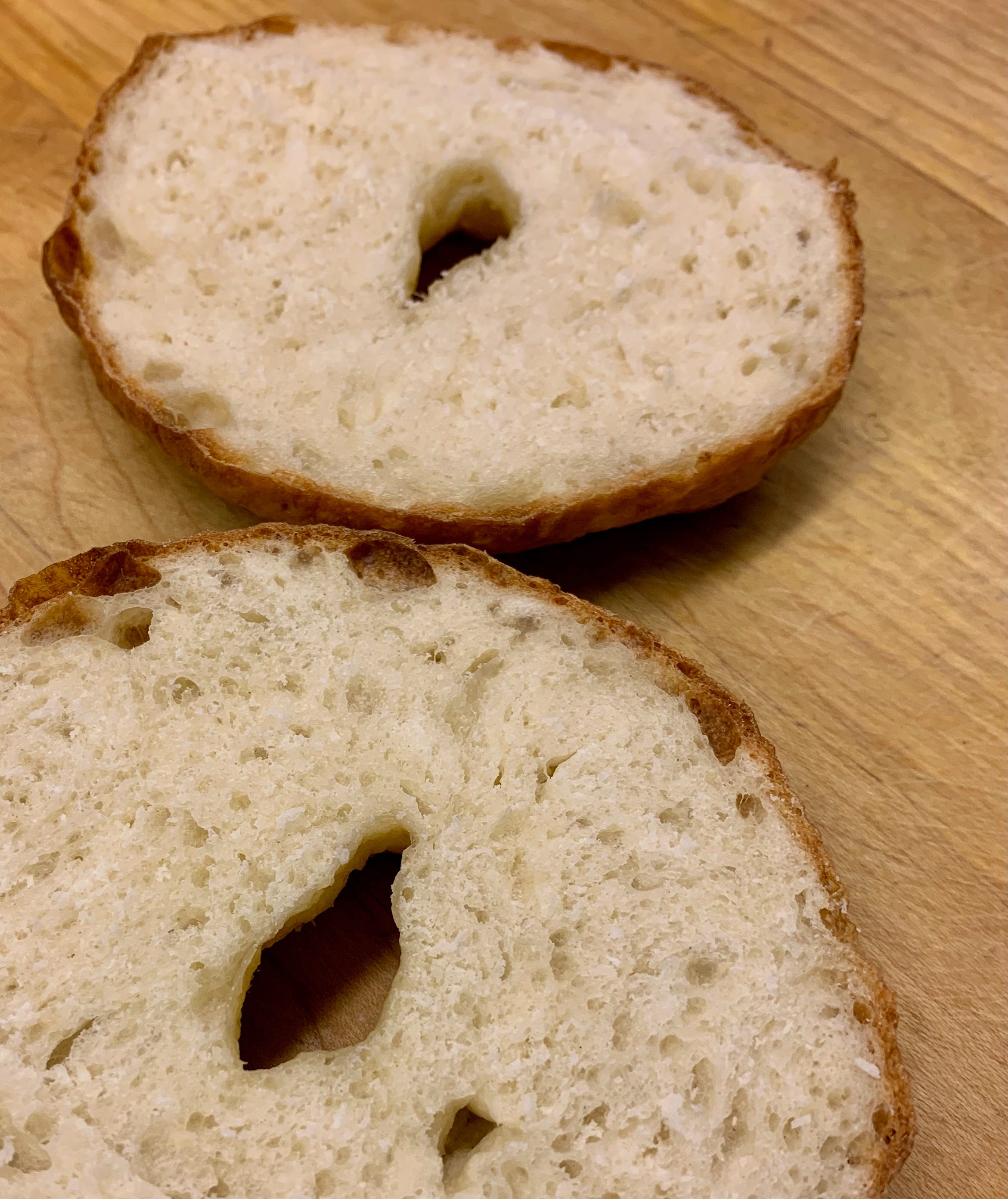
Ever since I started Green Mountain Baking and have continuously solicited my family members for ideas on what to bake for each session, my youngest niece ALWAYS suggests bagels. And every time I tell her, it’s not really worth all the work for only two bagels. If I’m going to go through the effort of making them, then I’m going to bake a full batch. Which I have done, a few times.
“Why isn’t it worth the work,” she always asks me.
“Because you have to boil them before baking,” I always answer.
Sometimes the conversation ends there. Sometimes it goes the extra mile.
“Why do you have to boil them,” she’ll ask.
“I don’t know.”
Recently I was signed up for a whole weekend of extra family time with my nieces while their parents were working. My youngest niece and I were coming up with a plan on how to spend our Saturday, when my brother suggested we bake something. That was a good idea, and I suggested we make something for this newsletter.
“Can we make bagels?!”
Her anticipation, excitement and 12 hours ahead of me entertaining a 10 year old brought out a new answer from me: Sure! We will make two bagels.


Over the next few days, during a couple long dog walks, there was great discussion about the two bagels. Two questions in particular came up multiple times. First, what kind of bagels are we going to make?
“I only like plain bagels,” was declared by the 10 year old almost immediately. But by the next dog walk it changed to “I only like plain bagels and everything bagels. But only if you take all the seeds off. Except the poppy seeds. The poppy seeds can stay on.”
“So you only like plain bagels and poppy seed bagels?” I was trying to clarify.
“Yes.”
“You could have led with that, you know.”
“But taking all the seeds except the poppy seeds off an everything bagel is another way of getting a poppy seed bagel!”
I had to admit, she had me there.
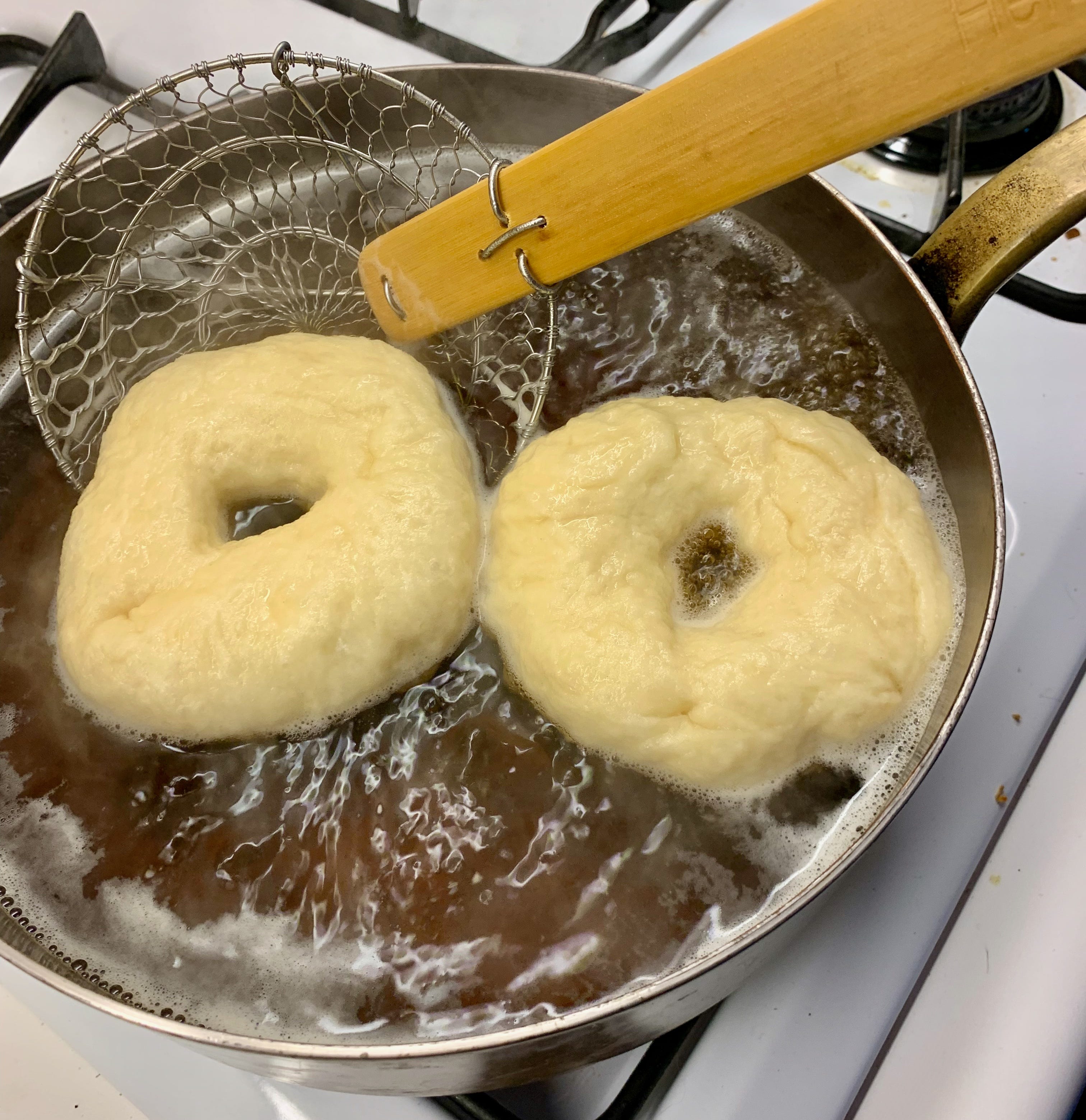
The second question she kept asking me was about why we boil the bagels. I had some recollection about the sweet water bath giving the bagel its shine or stretchiness, but couldn’t recall enough to commit to an answer, so I stuck with “I don’t know” and asked my friend Google.
King Arthur Baking backed me up on the shiny crust in a blog post called The 5 Elements of Great Bagels. The short one minute-ish boil on each side gelatinizes the starch on the outside of the bagel. This helps make the exterior of the bagel shiny.
The water bath is not just water. Other ingredients are added for flavor, or extra shine. Non-diastatic malt powder and barley malt syrup are the two additives I’ve seen most often in recipes. Honey can also be used, and I have used molasses because I already have it on hand.
Foodcrumbles.com goes on to talk about how the boiling water deactivates some of the yeast on the outer layer. This restricts the rise at the surface creating the dense chewy interior that is characteristic of a good bagel. The gelatinization does something similar, where it makes the crust less flexible.
It turns out that boiling the bagel is what makes a bagel, a bagel.
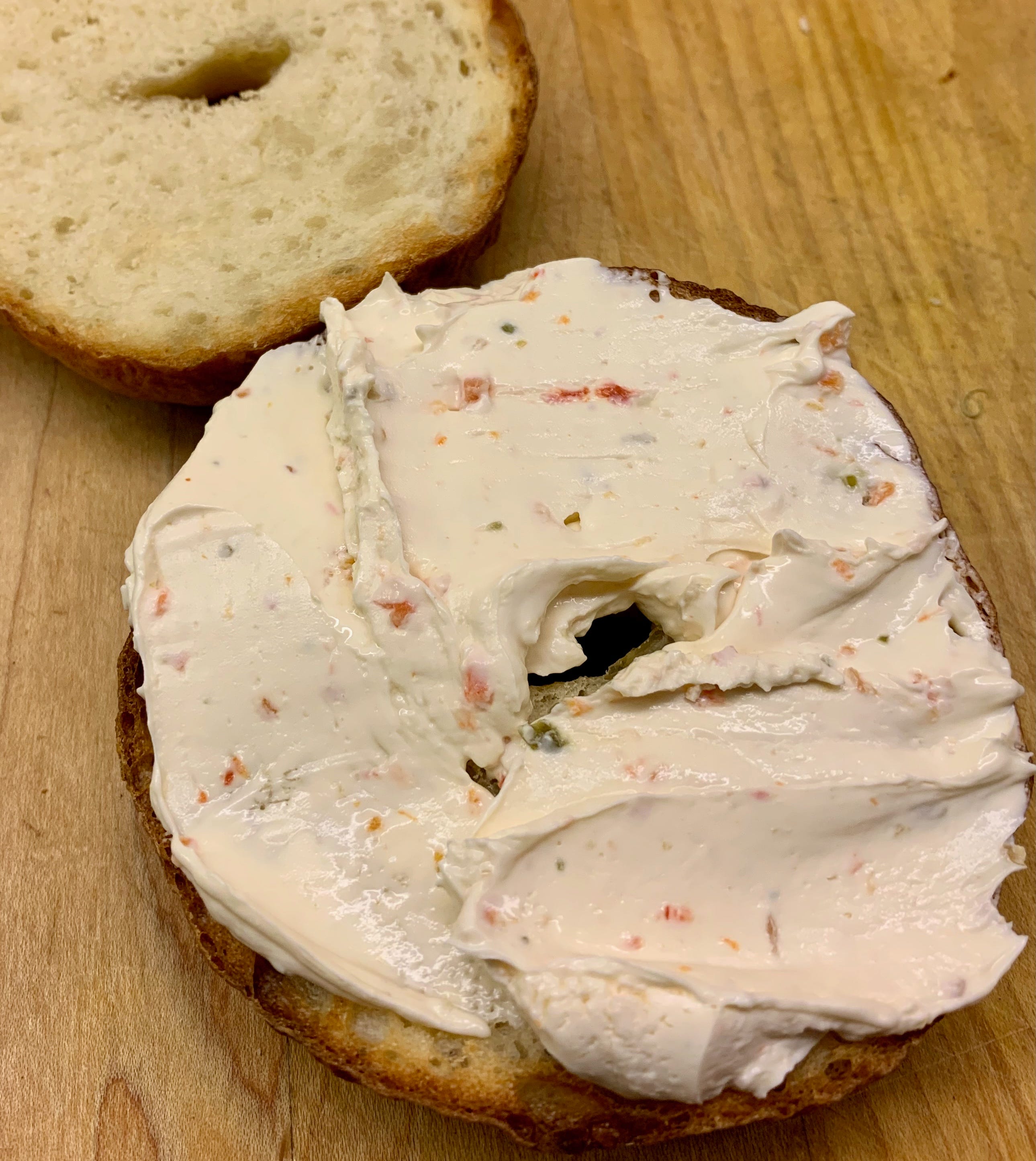
In order to make our two bagels, I blended two different recipes from King Arthur Baking. The first recipe, Bagels, I used for the dough. I wanted a recipe that was relatively quick, so I selected it for it’s 3 hour project time. The second recipe, Martin’s Bagels, I selected for the easier boiling/baking procedure. And it called for molasses in the water bath. Molasses I had. Non-diastatic malt powder, I did not.
Here is the resulting blended recipe reduced to make two bagels. And here is how the 10 year old and I made it happen.
ingredients
2.25g yeast
120g bread flour
3g salt
3.5g brown sugar
76g warm-ish water
directions
Mix the dough ingredients together and knead until you get a ball of dough that is smooth and elastic.
Let rise until puffy, but not quite doubled in bulk.
On a floured surface, divide the dough in half and shape each into a smooth round ball.
Let rest, covered for 15 minutes or so.
At this point you should preheat your oven to 4500F.
To make the hole, gently poke your fingers through the middle and stretch until the hole is 2-3in in diameter.
Let the rings rest for another 15 minutes or so.Meanwhile, get your water bath ready.
Add 2 inches of water, ~20g of molasses and 9g of salt to a pot deep enough for the bagels to float and bring the mixture to a medium boil.
Carefully add the bagels and cook for about 30 seconds on the first side, then flip them over and cook for another 60-90 seconds on the second side.
Place the wet bagels on parchment paper and load into the oven.
Bake for ~20 minutes.
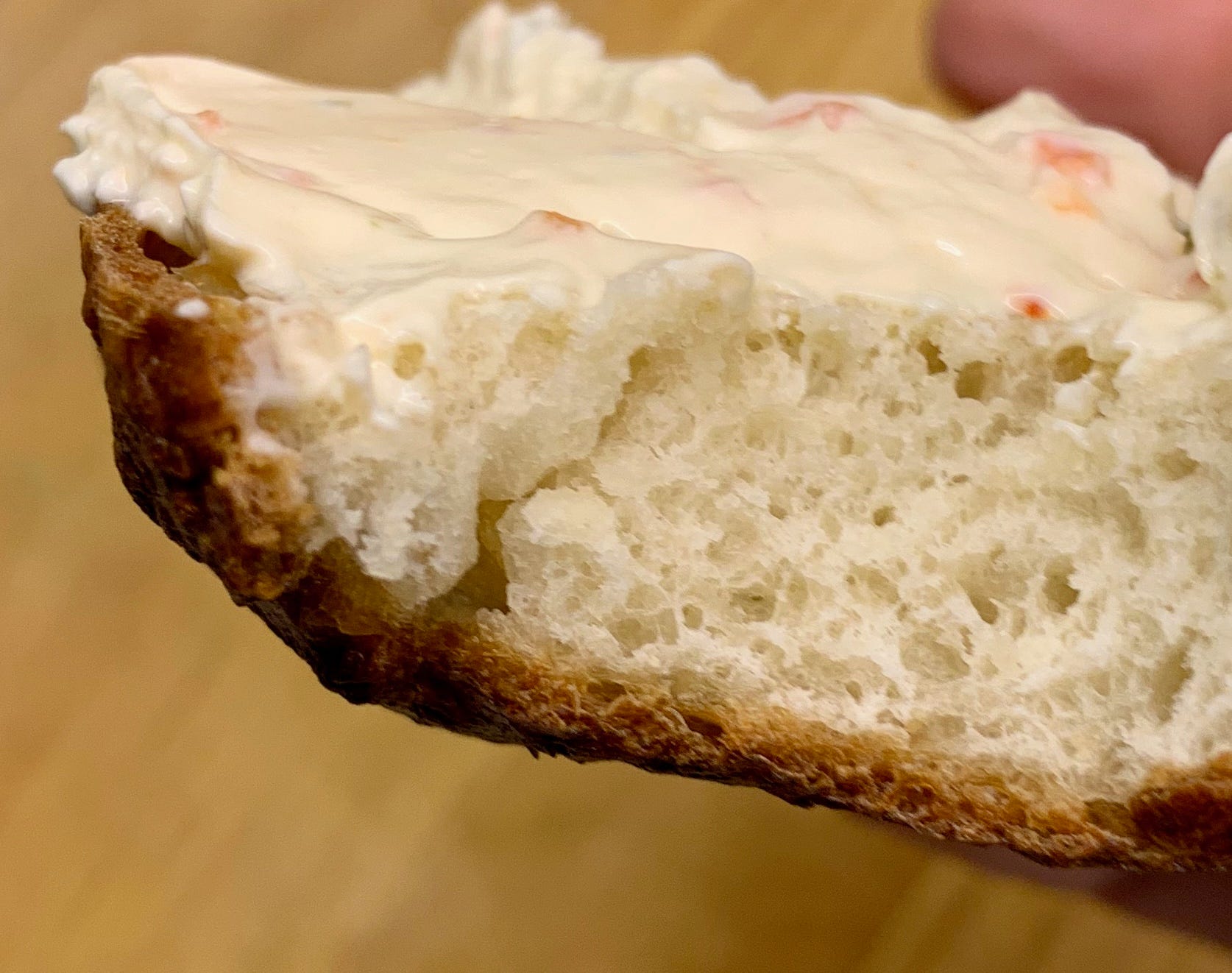
My niece went home that night and took her bagel with her. We did not enjoy them together. In fact, last I knew, her bagel was still sitting on her kitchen counter. Waiting for her.
“Why haven’t you eaten your bagel?” Given how long she’d been pestering me to bake them with her, I was surprised that her’s was still in existence.
“We don’t have any cream cheese.”
“So what? Put butter or goat cheese on it. I’ve seen you eat those on toast before.”
“I only eat bagels with cream cheese. And it has to be PLAIN cream cheese.”
sigh
Of course it does.